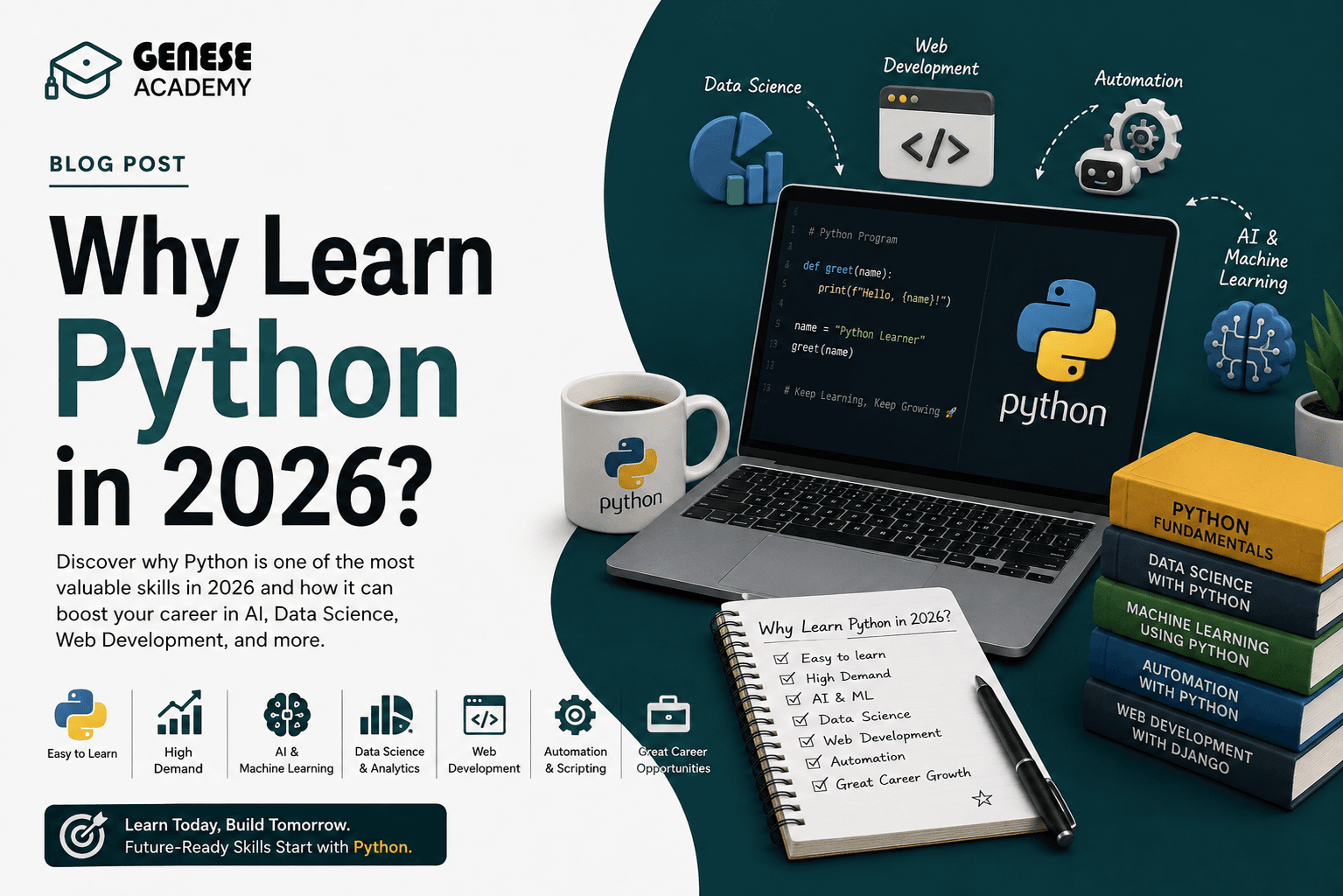
Technology is moving quickly, but some programming skills continue to remain valuable and Python is one of them. Its simple syntax, huge collection of libraries, and wide range of applications make it a popular choice for both beginners and experienced developers.
If you’re thinking about starting programming or upgrading your technical skills, why learn Python in 2026 is an important question. The answer is simple: Python gives you the flexibility to explore multiple technology fields without having to learn a completely different language for every career path.
Python Is Easy to Learn
One of Python’s biggest advantages is its straightforward and readable syntax. Beginners can focus on understanding programming concepts instead of struggling with complicated syntax.
This makes Python a strong starting point for students who have never written code before. As your skills improve, you can move from basic programs to advanced applications, automation scripts, data analysis, and AI projects.
Python Powers Artificial Intelligence
Artificial intelligence is one of the biggest reasons Python remains relevant in 2026. Many popular AI and machine learning frameworks and libraries are built around Python.
Developers and data scientists use Python for tasks such as:
- Machine learning
- Generative AI
- Natural language processing
- Computer vision
- Data preparation
- AI automation
If you’re interested in building AI applications rather than simply using AI tools, learning Python can give you an important programming foundation.
Python for Data Science
Modern businesses generate enormous amounts of data, but raw data is only useful when someone can analyze it.
Python is widely used for data analysis, visualization, and machine learning. Libraries such as Pandas, NumPy, and Matplotlib allow professionals to process information, identify patterns, and turn complex datasets into useful insights.
This makes Python particularly valuable for people interested in Data Science and Analytics careers.
Python for Web Development
Python isn’t limited to AI and data. It is also used to build websites and web applications through frameworks such as Django and Flask.
Developers can use Python to create backend systems, APIs, databases, authentication systems, and other components that power modern web applications.
For learners interested in becoming full stack developers, Python can therefore become another useful tool in their development toolkit.
Python Makes Automation Easier
Imagine performing the same repetitive computer task hundreds of times. Instead of doing everything manually, Python can automate many routine processes.
Python is used to automate tasks such as:
- File management
- Data processing
- Report generation
- Web scraping
- Testing
- Repetitive workflows
This is especially useful in today’s workplace, where companies are constantly looking for ways to save time and improve productivity.
Python Skills Can Open Multiple Career Paths
Learning Python doesn’t lock you into one career. Depending on the skills you develop alongside it, you can explore roles such as:
- Python Developer
- Data Analyst
- Data Scientist
- Machine Learning Engineer
- AI Developer
- Automation Developer
- Backend Developer
The key is not simply knowing Python syntax. Building projects and learning how to apply Python to real-world problems is what turns programming knowledge into a valuable professional skill.
Who Should Learn Python?
Python is suitable for a wide range of learners. Students can use it to build their programming foundation, while working professionals can use it to automate tasks or move toward AI and data-related careers.
It is especially useful for people interested in Artificial Intelligence, Machine Learning, Data Science, Web Development, and Automation.
How to Start Learning Python in 2026
Start with the fundamentals: variables, data types, conditions, loops, functions, and object-oriented programming. Once you understand the basics, begin building small projects instead of only watching tutorials.
At Genese Academy, learners interested in Python can develop their skills through practical training and explore areas such as Data Science, AI, Machine Learning, and automation.
The best way to learn Python is to write code, make mistakes, build projects, and keep improving.
Is Python Still Worth Learning in 2026?
Absolutely. Python’s strength isn’t simply its popularity—it’s the number of fields where it can be applied. From AI and data science to automation and backend development, Python continues to provide a foundation for many modern technology careers.
If you’re wondering why learn Python in 2026, think beyond the programming language itself. You’re learning a skill that can become the foundation for an entire technology career.