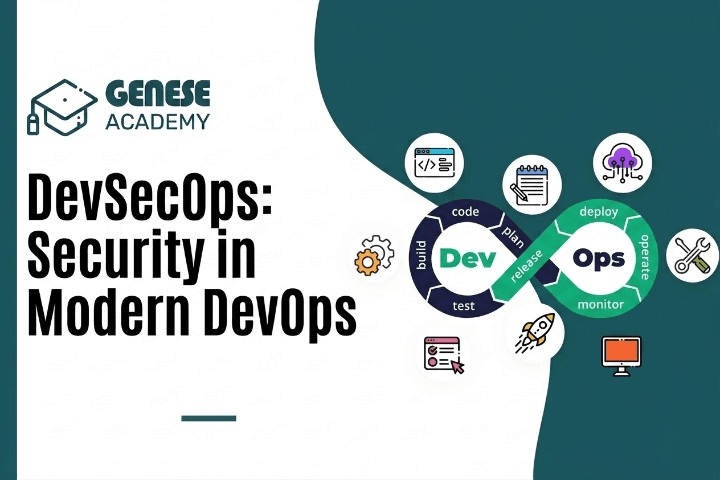
In today’s fast-moving software industry, security is no longer optional. Modern development teams need faster deployments without compromising application safety. At Genese Academy, professionals and beginners can learn how DevSecOps combines development, security, and operations to create secure and scalable software delivery pipelines. By integrating security into every stage of DevOps, organizations can reduce vulnerabilities, improve compliance, and deliver applications more efficiently.
DevSecOps stands for Development, Security, and Operations. It is an approach that integrates security practices directly into the DevOps process. Instead of treating security as a separate phase at the end of development, DevSecOps ensures security is considered from the very beginning of the software development lifecycle.
As cyber threats continue to increase, companies are adopting DevSecOps to create secure applications without slowing down development speed. In this article, we will explain what DevSecOps is, why it matters, its benefits, tools, and best practices for implementing security in modern DevOps environments.
What Is DevSecOps?
DevSecOps is the practice of embedding security into every stage of the DevOps pipeline. Traditionally, security testing was performed only after the development phase was complete. This approach often caused delays, increased costs, and left vulnerabilities undiscovered until late in production.
DevSecOps changes this model by introducing automated security checks throughout the Continuous Integration and Continuous Deployment (CI/CD) pipeline. Developers, security teams, and operations teams work together to identify and fix vulnerabilities early.
The primary goal of DevSecOps is to make security a shared responsibility rather than the sole responsibility of the security team.
Why DevSecOps Is Important
Modern applications are built using cloud platforms, containers, APIs, and third-party libraries. While these technologies improve scalability and performance, they also increase the attack surface for cybercriminals.
Here are some major reasons why DevSecOps is important:
1. Faster Vulnerability Detection
By integrating security tools into the CI/CD pipeline, vulnerabilities can be detected during development instead of after deployment. Early detection reduces risks and lowers remediation costs.
2. Improved Collaboration
DevSecOps promotes collaboration between developers, operations, and security teams. This creates a culture where security becomes part of the development process.
3. Automated Security Testing
Automation plays a major role in DevSecOps. Automated security scans ensure code is continuously tested without slowing down delivery pipelines.
4. Compliance and Governance
Organizations must comply with industry regulations such as GDPR, HIPAA, and PCI-DSS. DevSecOps helps maintain compliance by enforcing security policies automatically.
5. Reduced Security Breaches
Integrating security into DevOps reduces the likelihood of data breaches, ransomware attacks, and unauthorized access.
Key Components of DevSecOps
Several important practices make DevSecOps successful in modern environments.
Secure Coding Practices
Developers must follow secure coding standards to minimize vulnerabilities such as SQL injection, cross-site scripting (XSS), and authentication flaws.
Continuous Security Testing
Security testing tools are integrated into CI/CD pipelines to scan code continuously.
Infrastructure as Code (IaC) Security
Infrastructure configurations should be scanned for misconfigurations before deployment.
Container Security
Containers like Docker and orchestration platforms such as Kubernetes require regular vulnerability scanning and runtime monitoring.
Monitoring and Incident Response
Continuous monitoring helps detect suspicious activities and respond quickly to threats.
Popular DevSecOps Tools
Many organizations use specialized tools to automate security in DevOps pipelines. Here are some widely used DevSecOps tools:
- Jenkins for CI/CD automation
- SonarQube for code quality and vulnerability scanning
- Snyk for dependency vulnerability management
- Docker for containerization
- Kubernetes for container orchestration
- Terraform for Infrastructure as Code
- OWASP ZAP for web application security testing
- Aqua Security for container security
- GitHub Advanced Security for code scanning
These tools help organizations automate security checks and reduce manual effort.
DevSecOps Best Practices
Implementing DevSecOps successfully requires planning and collaboration. Below are some important best practices.
Shift Security Left
Security should start early in the development process instead of waiting until deployment.
Automate Security Processes
Automating vulnerability scans, compliance checks, and security testing improves efficiency and consistency.
Train Development Teams
Developers should receive security training to understand common vulnerabilities and secure coding practices.
Implement Least Privilege Access
Users and systems should only have access to the resources necessary for their tasks.
Monitor Continuously
Continuous monitoring helps detect threats in real time and minimizes damage from attacks.
Update Dependencies Regularly
Outdated libraries and software packages can contain known vulnerabilities. Regular updates reduce risks.
Challenges of DevSecOps
Although DevSecOps offers many benefits, organizations may face some challenges during implementation.
Cultural Resistance
Teams may resist changing traditional workflows and adopting shared security responsibilities.
Complexity of Tool Integration
Integrating multiple security tools into existing pipelines can be difficult.
Skills Gap
Many organizations lack professionals with expertise in both DevOps and cybersecurity.
False Positives
Automated security tools sometimes generate false alerts that require manual review.
Despite these challenges, the long-term benefits of DevSecOps outweigh the difficulties.
The Future of DevSecOps
As cloud-native applications and AI-powered systems continue to grow, DevSecOps will become even more critical. Organizations are increasingly adopting zero-trust security models, automated threat detection, and AI-driven security analytics.
Future DevSecOps trends may include:
- AI-powered vulnerability detection
- Automated compliance management
- Serverless security solutions
- Advanced container runtime protection
- Security automation using machine learning
Businesses that adopt DevSecOps early will have a stronger security posture and faster software delivery capabilities.
Conclusion
DevSecOps is transforming how organizations approach software security in modern DevOps environments. By integrating security into every stage of development and deployment, companies can release applications faster while minimizing vulnerabilities and cyber risks. At Genese Academy, learners are trained to understand and implement these modern DevSecOps practices in real-world scenarios.
The combination of automation, collaboration, and continuous monitoring makes DevSecOps an essential strategy for secure software delivery. As cyber threats continue to evolve, organizations that prioritize DevSecOps will be better prepared to protect their systems, data, and users, a key focus area in Genese Academy’s DevOps training programs.
Whether you are a startup or an enterprise, implementing DevSecOps practices can significantly improve both security and operational efficiency in today’s digital landscape, and mastering these skills through Genese Academy can help you stay ahead in the industry.