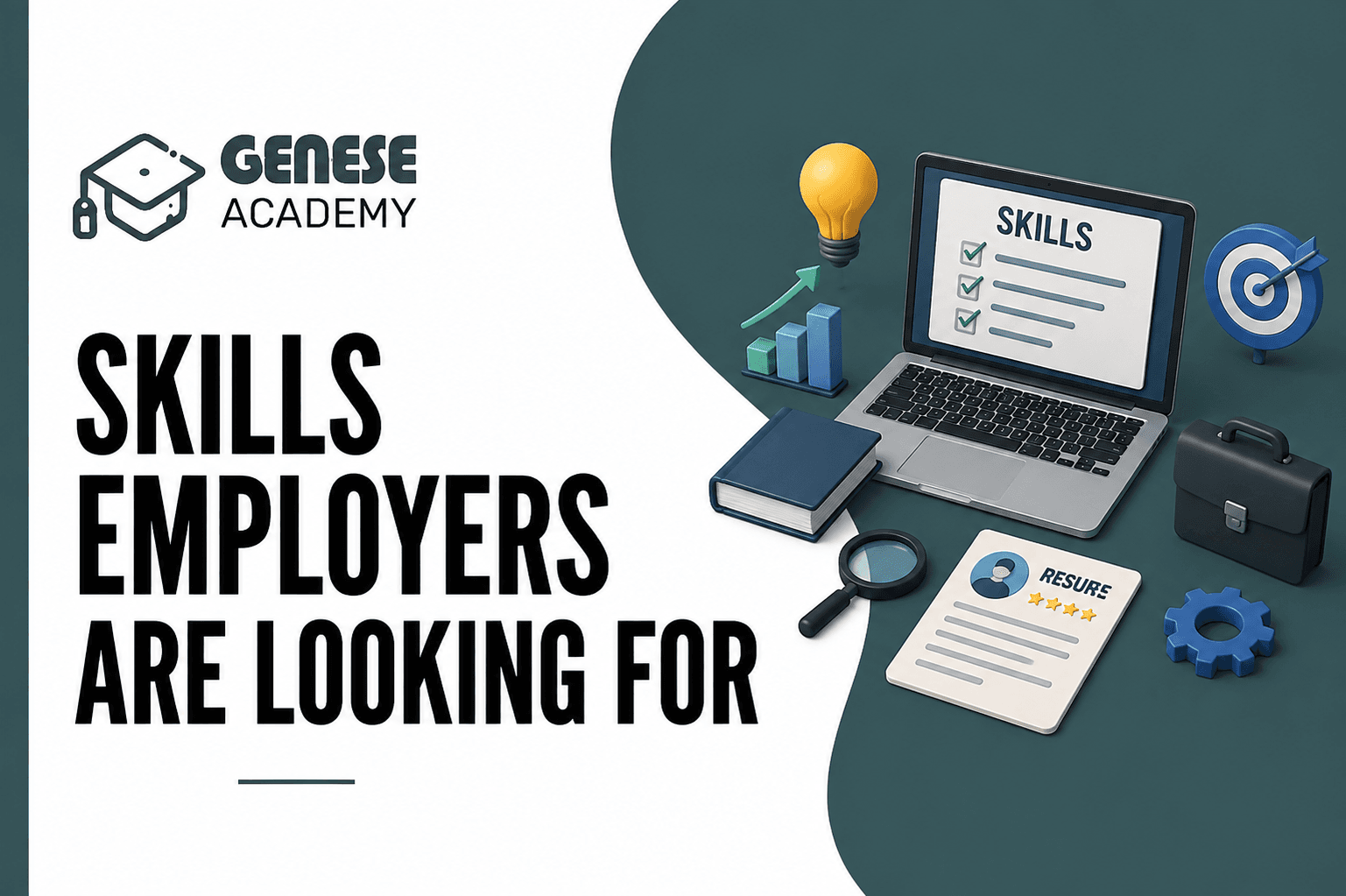
For years, getting a degree was considered one of the most important steps toward building a successful career. While education still matters, the way employers evaluate candidates is changing.
A degree tells an employer what you studied. Practical skills show what you can actually do.
Whether you’re applying for your first job, changing careers, or trying to move into a higher-paying role, having relevant skills can make a significant difference. Employers increasingly want people who can take what they know and apply it to real problems.
What Are Employers Looking For Today?
The answer depends on the industry, but some skills are becoming valuable across almost every field.
Employers want people who can:
- Solve real-world problems
- Communicate clearly
- Work with modern technology
- Adapt to new tools
- Manage projects and deadlines
- Think creatively
- Analyze information
- Work independently and with teams
- Continue learning as their industry changes
This doesn’t mean degrees are no longer useful. Instead, education and practical skills work best together.
A Degree Gives You Knowledge. Skills Help You Apply It.
Imagine two candidates applying for the same position.
Both have similar educational backgrounds. But one candidate can demonstrate real projects, software knowledge, communication skills, and practical experience.
The other candidate can only list subjects they studied.
Who is more likely to stand out?
This is why building a portfolio, completing projects, earning relevant certifications, and developing industry-specific skills can strengthen your profile.
Technology Skills Are Becoming Career Skills
You don’t need to become a programmer to benefit from technology.
Almost every modern workplace uses digital tools in some way. Businesses need people who understand websites, data, cloud platforms, digital marketing, cybersecurity, automation, AI, and creative software.
For someone entering the technology industry, this can mean learning skills such as:
Full Stack Web Development
Websites and applications power everything from e-commerce to online services. Learning frontend and backend development can help you understand how complete digital products are built.
Artificial Intelligence and AI Tools
AI is changing how businesses work. Understanding how to use AI tools effectively | and knowing what happens behind them | can help professionals improve productivity and develop new solutions.
Data Analytics
Companies collect huge amounts of information. Professionals who can turn data into useful insights can help businesses make better decisions.
Cloud Computing
Businesses increasingly rely on cloud infrastructure to run applications and services. Cloud skills such as AWS can open opportunities in development, infrastructure, and IT.
Digital Marketing
A great product still needs customers. SEO, social media, PPC, content strategy, and analytics help businesses reach the right audience.
Cybersecurity
As businesses become more dependent on technology, protecting networks, systems, and information becomes increasingly important.
Soft Skills Still Matter
Technology skills alone aren’t enough.
One of the biggest mistakes candidates make is focusing entirely on technical abilities while ignoring communication and professional behavior.
You might be an excellent developer, designer, marketer, or analyst—but you still need to explain your ideas, work with others, handle feedback, and meet deadlines.
Important professional skills include:
- Communication
- Teamwork
- Leadership
- Time management
- Problem-solving
- Adaptability
- Creative thinking
- Presentation skills
The strongest candidates combine technical ability with human skills.
Your Portfolio Can Speak Louder Than Your Resume
A resume says you know something.
A portfolio can show it.
If you’re learning web development, build websites and applications. If you’re learning graphic design, create branding projects. If you’re studying digital marketing, develop campaigns and analyze results. If you’re learning data science, work with real datasets.
Projects give employers something concrete to evaluate.
Instead of saying:
“I know web development.”
You can show:
“Here’s the website I built.”
That difference can make your application much stronger.
Certifications Can Add Proof to Your Skills
Certifications can also help demonstrate structured learning, particularly in technical fields.
They’re especially useful when you’re trying to enter a new industry or strengthen your existing qualifications.
However, a certificate should not be the final goal.
Learn → Practice → Build → Prove.
That combination is much more powerful than collecting certificates without developing practical ability.
How to Become More Job-Ready
You don’t need to learn everything at once.
Start by choosing the career direction you want to pursue.
Then:
1. Identify the skills your target job requires.
Look at actual job listings and make a list of frequently requested skills.
2. Choose one skill to develop first.
Avoid jumping between ten different courses without mastering any of them.
3. Practice through projects.
Apply what you learn instead of only watching tutorials.
4. Build a portfolio.
Keep your strongest projects in one place so employers can easily see your abilities.
5. Develop communication skills.
Practice explaining your projects and answering interview questions.
6. Keep learning.
Technology changes quickly. Your ability to learn may become one of your most valuable career skills.
Where Practical Skills Can Take You
At Genese Academy, learners can explore practical training across multiple career paths, including Full Stack Web Development, Artificial Intelligence, Data Science & Python, Digital Marketing, Cybersecurity, Graphic Designing, AWS Cloud Computing, and other technology and professional skills.
The goal isn’t simply to add another certificate to your resume.
It’s to develop skills you can actually use.
For example, someone interested in web development can learn to build complete applications. Someone interested in design can create professional visual work. Someone interested in digital marketing can learn how businesses attract and convert customers.
These practical experiences can help bridge the gap between learning something and being able to do something.
The Future Belongs to People Who Keep Learning
The job market will continue to change.
New technologies will appear. Some roles will evolve. Some tasks will become automated. New opportunities will emerge.
The safest approach isn’t to predict exactly which job will exist years from now.
It’s to become someone who can learn, adapt, and apply new skills.
Your degree can be an important part of your professional journey. But it doesn’t have to be the end of it.
Build Skills. Build Projects. Build Your Career.
The question isn’t whether your degree matters.
It does.
The better question is:
What can you do with what you’ve learned?
Develop practical skills alongside your education, keep building real-world experience, and stay curious about the tools changing your industry.
Because when employers are comparing candidates, your qualification may get you noticed—but your skills can help you stand out.